
Dairy Soy Free Foods: The Complete List (2026)
By SoyFreeSnacks Editorial Team
Allergy-aware writers, researchers, and home cooks · Updated June 4, 2026 · 9 min read
This article is for informational purposes only and is not medical advice. If you have a soy or dairy allergy, work with an allergist. Always read the current label before consuming, manufacturers can change formulations without notice.
I'll be straight with you: finding dairy soy free foods that you can actually trust is one of the more frustrating elimination challenges out there. Soy is in everything. Dairy is in everything else. And the ingredient lists on packaged foods read like a chemistry exam. Whether you're navigating this for yourself, for your kid, or because a breastfeeding elimination diet landed you here at midnight, I've got you. This is the one page that covers dairy soy free foods from the ground up: whole foods, packaged options, hidden ingredient names, a reference table, and restaurant reality checks.
What Counts as Dairy and Soy Free? (Quick Definition)
Let's set the scope before we dive in, because these two allergens have a lot of sneaky aliases.
Dairy means anything derived from animal milk: cow, goat, sheep, you name it. Both soy and milk are among the 9 major FDA-recognized allergens under the Food Allergen Labeling and Consumer Protection Act (FALCPA). The FDA requires "milk" to be declared on food labels, but dairy hides under names like casein, whey, lactalbumin, lactose, ghee, and butter. If you see any of those, it contains dairy. Full stop.
Soy means soybeans and every derivative. That includes soy lecithin, textured vegetable protein (TVP), miso, tempeh, tofu, edamame, soy sauce, and sometimes "natural flavors." The FDA also requires "soy" to be declared on labels, but derivatives can be buried. More on that in the label section below.
Avoiding both is common for infants with milk soy protein intolerance (MSPI), nursing parents on a food allergy elimination diet, and adults with confirmed allergies. The approach looks the same whether you're 4 months old or 40 years old: whole foods first, packaged foods verified second.
Naturally Dairy and Soy Free Foods (The Safe Foundation)
Good news: a huge swath of real food is inherently free of both allergens. This is your foundation. Build meals around these and you're already winning.
Proteins
- Plain, unprocessed meats: chicken, beef, pork, lamb, turkey. Unseasoned, unmarinated, no additives.
- Seafood: fish, shrimp, scallops, crab. Plain, not breaded or pre-seasoned.
- Eggs: Yes, eggs are dairy free. The egg-and-dairy confusion is everywhere, so let's be clear. Eggs come from chickens, not cows. They are completely separate allergens. Unless you have a specific egg allergy, eggs are fair game on a dairy soy free diet.
- Legumes (except soybeans): lentils, chickpeas, black beans, kidney beans, pinto beans. Naturally soy free. Edamame and soybeans are off the list entirely.
Fruits and Vegetables
- Every fresh fruit. Every fresh vegetable. No exceptions. Buy them whole, wash them, eat them.
- Frozen plain vegetables are also fine. Just check that the bag contains only the vegetable with no sauce or seasoning blend added.
Grains and Starches
- Rice (white, brown, wild): naturally free of both allergens.
- Potatoes and sweet potatoes: plain, not pre-seasoned.
- Quinoa: naturally dairy and soy free.
- Oats: plain oats are inherently soy and dairy free, but oat processing can introduce cross-contact with other allergens. Look for oats from a dedicated facility if cross-contact is a concern, and verify the label every time.
Nuts and Seeds
- Most plain nuts and seeds are naturally dairy soy free: almonds, cashews, walnuts, sunflower seeds, pumpkin seeds.
- The catch: shared facilities. Many nut products are processed alongside soy. Check the "may contain" statement and, for severe allergies, contact the brand directly before consuming.
Packaged Dairy Soy Free Foods Per Current Labels
Here's where I have to be real with you: no packaged food is permanently soy-free or dairy-free. Formulations change. A product that was clean last year may have added soy lecithin this year. Verify the label every single time you buy. With that said, these categories and brands have historically been free of both allergens per their labels. Always check the current version before you put anything in your cart.
Chips and Crunchy Snacks
- Kettle Brand chips (select flavors like Sea Salt): soy-free per current label on many varieties. Verify each flavor individually, as ingredients differ by variety.
- Terra Chips (original): made from root vegetables, no dairy or soy per current label on select varieties.
- Beanitos (black bean chips, select flavors): bean-based, dairy and soy free per current label on some varieties.
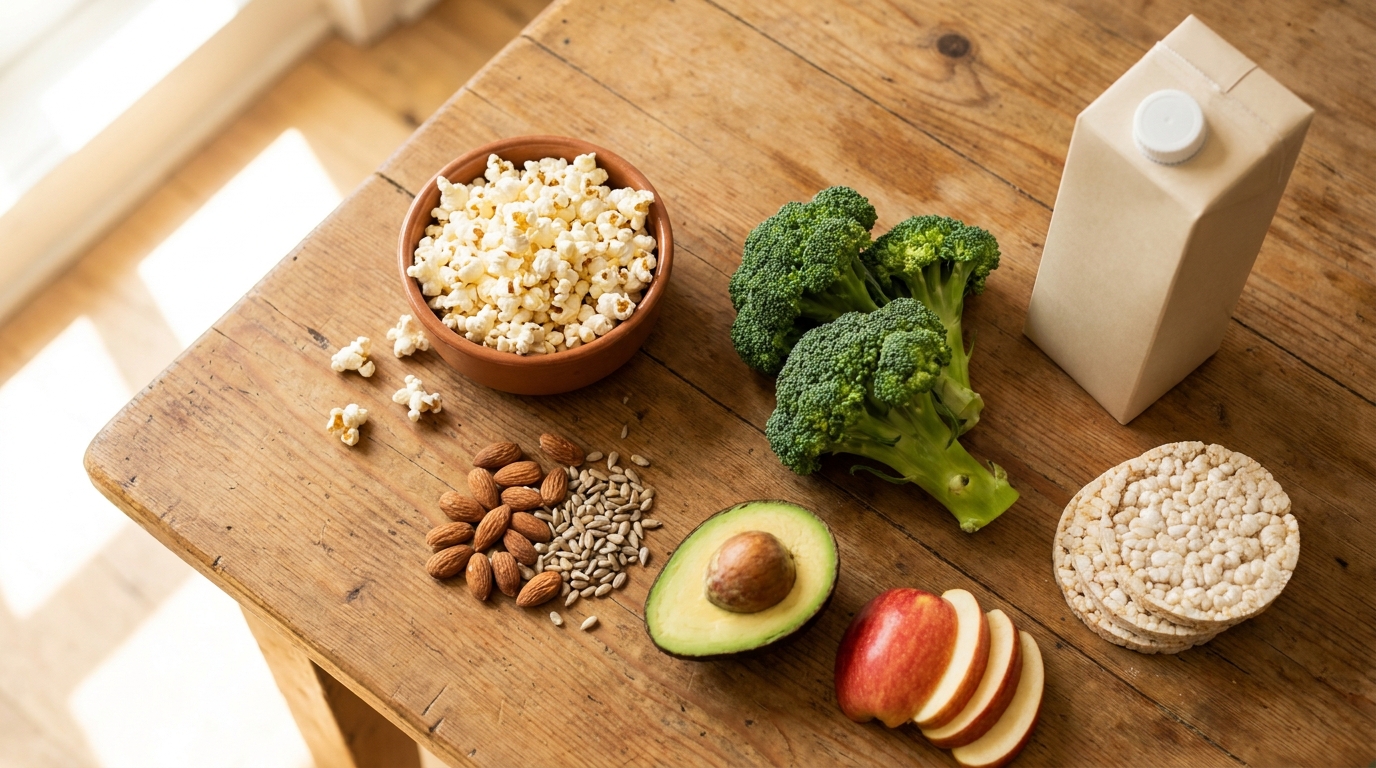
- Plain popcorn (air-popped or salted, no butter flavoring): one of the most reliably clean dairy soy free snacks. Butter-flavored popcorn contains dairy derivatives. Skip it.
- Hippeas chickpea puffs (select flavors): check each flavor. Some varieties are dairy and soy free per current label.
Crackers
- Triscuits (original): historically a clean label, whole grain wheat, oil, salt. Verify the current label because flavored varieties often contain dairy or soy.
- Pretzel Crisps (original): check current label. The original flavor has been dairy and soy free per label in past formulations.
- Plain rice cakes: a solid bet for dairy soy free snacking. Flavored varieties often contain dairy. Stick to plain.
Dairy Aisle Alternatives
- Coconut milk (canned or carton): naturally dairy and soy free. Check label for additives.
- Oat milk: most plain oat milks are dairy and soy free per current labels, but some brands add soy lecithin as an emulsifier. Read the label every time, not just once.
- Rice milk: typically dairy and soy free. Verify label.
- Almond milk: some brands add soy lecithin. Do not assume it's soy free. Check the ingredient list on each carton.
And get this: Earth Balance, a popular dairy-free butter alternative, contains soy. It's marketed as dairy-free, which it is, but it is not soy-free. This is exactly the kind of trap that catches people off guard.
Hidden Dairy and Soy Ingredients to Watch on Labels
This is the section no competitor bothers to write clearly. Let's fix that. Knowing these names is the core skill of dairy free label reading and soy free label reading combined.
Hidden Dairy Names
- Casein / sodium caseinate / calcium caseinate: milk protein. Found in some non-dairy creamers and protein powders. If you see it, it contains dairy.
- Whey / whey protein isolate: milk-derived. Common in protein bars, crackers, and baked goods.
- Lactalbumin / lactoglobulin: milk proteins, less commonly labeled.
- Lactose: milk sugar. Found in some medications and processed foods.
- Ghee: clarified butter. Still dairy. Found in some "clean" or "paleo" products.
- Butter, butter oil, butter flavor: all dairy.
Hidden Soy Names
- Soy lecithin: an emulsifier derived from soybeans. Found in chocolate, some crackers, salad dressings, and vitamins. Some soy-allergic individuals react to it. Consult your allergist. Do not assume it's fine just because it's a derivative.
- Textured vegetable protein (TVP): almost always soy-based. Found in meat alternatives and some chilis.
- Miso: fermented soybean paste. Found in soups, dressings, and "umami" seasonings.
- Tempeh and tofu: whole soy foods. Easy to spot on a label, but watch for them in restaurant dishes where they may not be obvious.
- Edamame: immature soybeans. Still soy. Avoid.
- Hydrolyzed soy protein / hydrolyzed vegetable protein (HVP): soy-derived flavor enhancers. Found in soups, sauces, and seasoning packets.
- Vegetable oil / vegetable broth: these can include soybean oil or soy in the formulation. If the label just says "vegetable oil" without specifying the source, contact the manufacturer and assume it contains soy until confirmed otherwise.
- Natural flavors: this one is frustrating. "Natural flavors" is a catch-all term and can legally include soy derivatives. If a product lists natural flavors and you have a severe soy allergy, call the manufacturer before consuming.
The crazy part? The FDA does require "soy" and "milk" to be declared on labels under FALCPA, so the major allergen should appear somewhere in the ingredient list or in a "Contains:" statement. But derivatives in small amounts, processing aids, and natural flavors can still be gray areas. When in doubt, call the brand. Assume it contains soy until they confirm otherwise.
Dairy Soy Free Foods by Category (Reference Table)
Use this table as a quick reference when you're shopping or meal planning. "Check Label" means the category varies widely by brand. Do not assume any specific product is free of both allergens without reading the current ingredient list. For severe allergies, contact the manufacturer directly.
| Food Category | Safe (Whole/Plain) | Check Label (Varies by Brand) | Typically Avoid |
|---|---|---|---|
| Proteins | Plain chicken, beef, fish, eggs, lentils, chickpeas | Deli meats, sausages, veggie burgers, canned fish | Edamame, tofu, tempeh, seitan with soy |
| Grains and Starches | Plain rice, quinoa, plain potatoes, plain oats | Pasta, bread, crackers, flavored instant oats | Soy noodles, most commercial bread (often contains soy lecithin) |
| Snacks | Plain popcorn, plain rice cakes, fresh fruit | Flavored chips, protein bars, granola bars | Most cheese crackers, soy crisps, butter-flavored popcorn |
| Dairy Aisle Alternatives | Coconut milk (plain), plain rice milk | Oat milk, almond milk (some add soy lecithin) | All cow's milk, yogurt, cheese, butter, Earth Balance |
| Condiments and Sauces | Plain mustard, most plain hot sauces, olive oil | Salad dressings, marinades, BBQ sauce, ketchup | Soy sauce, teriyaki, most Asian sauces, Worcestershire (often contains soy) |
| Baked Goods | Home-baked using verified safe ingredients | Gluten-free packaged goods, allergen-free bakery items | Most commercial breads, pastries, muffins, cookies |
| Beverages | Water, plain fruit juice, black coffee, plain tea | Plant-based milks, flavored coffees, smoothie mixes | Dairy lattes, chai with milk, most protein shakes |
Eating Out Dairy and Soy Free: What to Know
Restaurants are where the best-laid plans fall apart. Here's the honest rundown.
Chick-fil-A: This is one of the most-asked questions I see, so let's address it directly. Most Chick-fil-A items contain soy. The marinades and seasonings on their grilled and fried chicken include soy ingredients. Cross-contact from shared fryers is also a real concern. Verify the current allergen menu at Chick-fil-A's official website before ordering, and understand that cross-contact risk exists even for items that don't list soy as a direct ingredient. Menus and formulations change, so check every visit.
The fried food problem: Most restaurants fry in soybean oil or a vegetable oil blend that includes soybean oil. Even if the food itself doesn't contain soy protein, cross-contact from the fryer oil is a real risk for people with soy allergies. Fried foods at restaurants are a hard pass.
Your safest restaurant moves:
- Ask for the allergen menu or ingredient sheet before ordering, not after.
- Order plain grilled proteins: grilled chicken breast, plain steak, plain fish. Ask for no marinade, no seasoning blend.
- Plain salads with oil and vinegar on the side. Bottled dressings almost always contain soy or dairy.
- Plain steamed or roasted vegetables with no sauce.
- Plain rice or plain baked potato.
Never assume. Menus change, recipes change, and what was soy-free last month may not be now. When a restaurant can't confirm an ingredient, skip it.
Dairy Soy Free Snack Ideas (Quick List)
Sometimes you just need a fast answer. Here are snack ideas that work for a dairy soy free diet, with the usual reminder to verify any packaged product's current label before buying.
- Fresh fruit: apples, bananas, grapes, berries, oranges. No label needed.
- Raw veggies with guacamole: guacamole is typically dairy and soy free per label. Check for additives in store-bought versions.
- Hummus with veggies: most plain hummus is dairy and soy free per current label. Verify before buying.
- Hard-boiled eggs: portable, filling, zero allergen issues unless you have a separate egg allergy.
- Plain rice cakes: the original flavor, not butter or cheese varieties.
- Plain popcorn: air-popped or lightly salted with no butter flavoring.
- Sunflower seed butter on allergen-free crackers: sunflower seed butter is typically soy and dairy free per label. Check for shared facility notes if your allergy is severe.
- Plain nuts: almonds, cashews, walnuts. Check for shared facility disclosures if your allergy is severe.
- Verified dairy soy free protein bars: these exist, but you'll need to check the label each time you buy. Formulations change on protein bars constantly.
- Kettle Brand chips or Hippeas (select flavors): verify the current label on every purchase.
I checked the numbers, and honestly, most of the snack aisle is off-limits when you're avoiding both allergens. But these options give you enough variety to get through a week without losing your mind.
Reminder: ingredient formulations change. Always verify the current label before consuming. Cross-contact risk varies by manufacturer and facility. Contact the brand directly if you have a severe allergy. Always consult your allergist before making dietary changes based on a food allergy diagnosis.
FAQs About Dairy Soy Free Foods
What can I eat that's dairy and soy free?
Naturally dairy soy free foods include plain meats, poultry, seafood, eggs, all fresh fruits and vegetables, rice, potatoes, quinoa, and most legumes (except soybeans and edamame). For packaged foods, plain chips, popcorn, and crackers can work, but always verify the current label since formulations change. Build your meals around whole foods first and you'll have the most reliable foundation for a dairy and soy free diet.
What snacks don't have soy or dairy?
Fresh fruit, raw vegetables, hard-boiled eggs, plain rice cakes, plain popcorn, and plain nuts are your most reliable options. For packaged dairy soy free snacks, Kettle Brand chips (select flavors), Hippeas (select flavors), Triscuits (original), and Beanitos (select flavors) are often dairy and soy free per current label. Verify each purchase because formulations change without notice.
How do I avoid dairy and soy when reading labels?
For dairy, look for: casein, whey, lactalbumin, lactose, ghee, butter, and butter flavor. For soy, look for: soy lecithin, textured vegetable protein (TVP), miso, tempeh, edamame, hydrolyzed soy protein, and hydrolyzed vegetable protein. Under FALCPA, the FDA requires "milk" and "soy" to be declared on labels, so check the "Contains:" statement too. If the label lists "natural flavors" or "vegetable oil" without specifying the source, contact the manufacturer before consuming and assume it contains soy until they confirm otherwise.
Is Chick-fil-A dairy and soy free?
Most Chick-fil-A menu items contain soy. Their marinades and seasonings include soy ingredients. Cross-contact from shared cooking equipment is also a concern. Verify the current allergen menu directly on Chick-fil-A's website before ordering, and understand that cross-contact risk exists. Menus and formulations change, so check every single visit rather than relying on past information.
Can I eat eggs on a dairy and soy free diet?
Yes. Eggs are not dairy. This is one of the most common misconceptions in the food allergy world. Dairy refers to milk and milk-derived products from animals. Eggs come from chickens and are a completely separate food and allergen. Unless you have a diagnosed egg allergy in addition to your dairy and soy issues, eggs are a great protein source on a dairy soy free diet.
What are the 9 major food allergens?
Per the FDA's FALCPA, the 9 major food allergens are: milk, eggs, fish, shellfish, tree nuts, peanuts, wheat, soy, and sesame. Both dairy (milk) and soy are on this list, which is why the FDA requires them to be declared on food labels. Knowing this list helps you understand why label reading is non-negotiable when you're managing multiple food allergies.
Is soy lecithin the same as a soy allergy trigger?
Possibly. Soy lecithin is a fat-based derivative of soybeans, and some soy-allergic individuals do react to it. The FDA has a separate exemption for highly refined soybean oil (not lecithin), but if you have a soy allergy, avoid refined soybean oil anyway. The same caution applies to soy lecithin: if you have a soy allergy, avoid it. Your allergist is the right person to advise you on whether soy derivatives are a trigger for your specific situation. Do not make that call based on an article.
What foods are hidden sources of soy I might be missing?
The biggest hidden soy sources are: soy lecithin (in chocolate, crackers, vitamins), textured vegetable protein or TVP (in meat alternatives), hydrolyzed vegetable protein (in soups and sauces), miso (in dressings and restaurant dishes), vegetable oil blends (may include soybean oil), vegetable broth (often soy-based unless specified as soy-free), and natural flavors (can contain soy derivatives). When in doubt, contact the manufacturer directly and assume the product contains soy until confirmed otherwise.