
Healthy Soy Free Snacks: 25+ Options Worth Stocking
By SoyFreeSnacks Editorial Team
Allergy-aware writers, researchers, and home cooks · Updated October 3, 2026 · 5 min read
This article is for general information, not medical advice. Ingredients and manufacturing practices change, so use the current package and your allergist’s guidance.
“Healthy” is a nearly useless word until you give the snack a job.
Are you trying to make it to a late lunch? Grab protein or fat with some fiber. Need something before a workout? A banana and a plain rice cake may be exactly enough. Want chocolate at 9 p.m.? Then a chocolate snack that fits your allergy needs is a perfectly honest answer. We don’t need to turn it into chia pudding to earn permission.
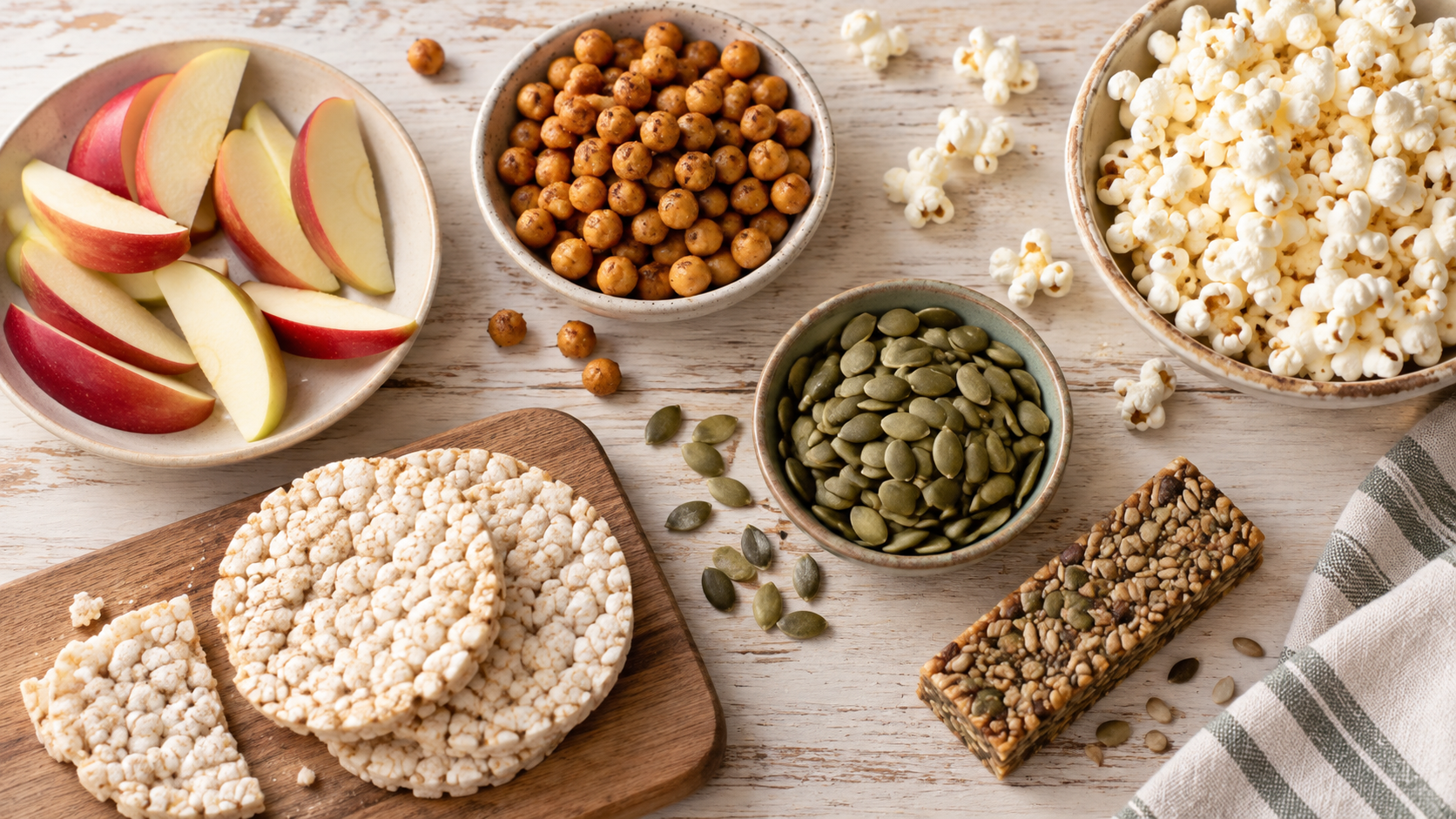
So this is a list of 30 healthy soy free snacks organized by what they’re actually good at, including a few packaged options for the days when “meal prep” means remembering to buy groceries.
Healthy soy-free snacks by what you need
| If you need... | Try... | Why |
|---|---|---|
| Something filling | Apple and sunflower seed butter | Fiber plus fat |
| Pre-workout fuel | Banana or applesauce | Easy carbohydrate |
| A protein boost | Greek yogurt or a hard-boiled egg | Simple and substantial |
| Crunch | Popcorn or roasted chickpeas | Actually satisfies the assignment |
| A bag-friendly backup | 88 Acres bar or MadeGood Granola Minis | Portable with clear allergen policies |
If you want a snack that actually sticks around
Fruit or crackers by themselves can be enough. If they leave you circling back to the kitchen in twenty minutes, the snack wasn’t bad. It was just incomplete. Add something with protein or fat.
- Apple with sunflower seed butter. Crisp, filling, and safe for many nut-free households too.
- Banana with peanut or almond butter. Cheap, fast, and more substantial than either half alone, assuming nuts work for you.
- Plain Greek yogurt with berries. A useful high-protein option if dairy is on the table.
- Hard-boiled egg with whole-grain crackers. The egg brings the protein; the crackers bring the crunch.
- Pear with pumpkin seeds. Sweet, crunchy, and easy to pack in separate containers.
- Cottage cheese with cucumber and black pepper. Cold, savory, and genuinely filling.
- Plain oatmeal with berries and cinnamon. Especially good when you want a warm snack that isn’t another bar.
- Chia pudding with fruit. Make it with whichever milk fits your other restrictions.
- Dates filled with sunflower seed butter. Sweet enough to feel like dessert, but with a little staying power.
- Popcorn with pumpkin seeds. A big bowl of crunch plus enough fat and protein to keep it from disappearing nutritionally.
If you want something fresh, cold, or not very heavy
Not every snack needs to “keep you full for hours.” Sometimes lunch was late and dinner is soon. Sometimes you want something juicy. These are for that.
- Orange wedges. No enhancement strategy required.
- Grapes with cheddar cubes. Sweet, salty, and far more satisfying than a bag of “fruit-flavored” anything.
- Bell pepper strips with homemade guacamole. The homemade part avoids turning a three-ingredient idea into an ingredient-list investigation.
- Cucumber rounds with cottage cheese. Add dill, pepper, or everything seasoning if you’ve already cleared the blend.
- Unsweetened applesauce with cinnamon. Useful when you need something soft, simple, or lunchbox-friendly.
- Frozen grapes. They take longer to eat and are weirdly excellent in hot weather.
- Freeze-dried strawberries or mango. Look for fruit as the only ingredient.
- A fruit-only bar. It’s portable fruit, not a protein bar. That’s fine. Let it be what it is.
If the real requirement is crunch
A lot of “healthy snack” advice fails because it answers hunger when the actual request was texture. A yogurt won’t replace chips just because both fit in a small bowl.
- Air-popped popcorn with olive oil and salt. Cheap, whole-grain, and easy to season your way.
- Roasted chickpeas. Salt and smoked paprika are enough; cumin and garlic powder also work.
- Plain rice cake with avocado and lemon. Add flaky salt if you want it to taste like something.
- Carrots with homemade hummus. Making hummus yourself is the cleanest way to control the oil and tahini.
- Plain nuts or seeds. Pistachios, almonds, pumpkin seeds, and sunflower seeds all work if the relevant allergens aren’t an issue.
- Roasted seaweed. Choose one made with an oil and seasoning blend that fit your needs.
- Apple chips. Look for a version made with apples and not much else.
Five packaged backups I’d actually keep around
Packaged snacks earn their shelf space by being there when the apple is bruised, the yogurt is warm, and you’re already late. These five aren’t nutritionally identical, and that’s the point.
- 88 Acres Seed + Oat Bars. The best fit here when you want a packaged snack with some heft.
- 88 Acres seed butter pouches. Good with fruit, crackers, or directly from the pouch when decorum has left the building.
- MadeGood Granola Minis. Convenient for lunchboxes and portioned snacks, with a clearly published allergen policy.
- MadeGood Crispy Squares. Sweet and portable. They’re a treat-style snack, not a bowl of kale in disguise.
- SkinnyPop Original. A simple salty option with three listed ingredients: popcorn, sunflower oil, and salt.
Why these brands made the cut
88 Acres says its dedicated bakery is free from the top nine allergens, including soy, and publishes details about supplier checks and ingredient testing. MadeGood says its products are made in a dedicated facility free from the top nine allergens. Those are stronger, more useful statements than a vague icon on the front of a box.
For SkinnyPop, I’m talking about Original specifically. The current product page lists popcorn, sunflower oil, and salt. That doesn’t automatically clear every flavor wearing the same logo.
What “healthy” means here, without the wellness sermon
I’m using a pretty ordinary standard. A useful everyday snack does at least one of these things well:
- adds protein, fiber, or unsaturated fat;
- gets fruit, vegetables, or whole grains into the day;
- solves hunger without requiring a recipe and a free afternoon;
- or scratches the sweet, salty, or crunchy itch well enough that you enjoy it.
It doesn’t need to do all four. In fact, that’s how perfectly normal food turns into a dense beige puck sold beside the register for $3.79.
If you’re comparing two packaged options, use the Nutrition Facts panel for the thing you care about. Want it to last longer? Compare protein and fiber. Watching sodium? Compare sodium at the same serving size. Looking for a sweet snack? Check added sugar, then decide whether the number works for you. The FDA’s label guide is dry but useful. The front of the bag is advertising. The back is information.
One soy note, because you already know why you’re here
I’m not going to repeat “read the label” after every apple and bowl of popcorn. For packaged food, check the current label once because recipes and facilities can change. This site excludes soybean oil and soy lecithin from its recommendations. If you want the full ingredient-name breakdown, use the guide to sneaky names for soy. If you’re stocking the whole kitchen, the complete soy-free foods list is the better starting point.
The FDA requires major allergens such as soy to be declared, but precautionary statements about shared equipment or facilities are voluntary. If cross-contact matters for your allergy, a silent package isn’t the same as a dedicated facility.
The four-part snack shelf
You don’t need 30 snacks in the house. You need four roles covered:
- Something fresh: apples, bananas, berries, carrots, or whatever you’ll actually eat before it liquefies in the drawer.
- Something filling: eggs, yogurt, cheese, seed butter, nuts, or roasted chickpeas.
- Something crunchy: popcorn, rice cakes, seeds, or crackers.
- Something that can live in a bag: a bar, fruit-only snack, or sealed packet of nuts or seeds.
That’s enough variety to avoid snack boredom without turning one cabinet into a specialty-food warehouse. My vote: pick one item from each category, replace what you finish, and ignore anyone trying to make snacking into a second job.
FAQs about healthy soy-free snacks
What’s the most filling soy-free snack?
Pick a carbohydrate or produce item and add protein or fat. Apple with sunflower seed butter, yogurt with berries, and an egg with crackers are all better bets for lasting power than plain fruit or crackers alone.
What’s a good soy-free snack before a workout?
Keep it simple and easy to digest. A banana, applesauce, dates, or a plain rice cake can work well. How much you need depends on the workout and how recently you ate.
Are protein bars usually soy-free?
No. Soy protein, soybean oil, and soy lecithin show up often in bars. A brand’s allergen policy is more useful than the word “protein” on the wrapper.
Is popcorn a healthy soy-free snack?
Plain popcorn is a whole grain and a solid crunchy snack. Packaged and microwave versions can use different oils and flavorings, so the exact variety matters.
Does plant-based mean soy-free?
Absolutely not. Soy is a plant. Burgers, protein powders, yogurts, bars, and frozen meals marketed as plant-based often lean heavily on it.
What can I pack for a soy-free school snack?
Try a fruit-only bar, applesauce pouch, MadeGood Granola Minis, freeze-dried fruit, popcorn, or fruit with a seed butter pouch. School allergy rules vary, so check the classroom policy too.
You may also like
Best Soy Free Protein Snacks: 15 Options That Actually Work
We tested dozens of options to find actual soy-free protein snacks. Here are the top picks that deliver clean macros without hidden soy derivatives or cross-contact risks.
8 min read
Best Vegan Soy-Free Snacks: 20+ Options That Actually Taste Good
Vegan and soy-free at the same time? Harder than it sounds, but absolutely doable. Here are 20+ snacks organized by category, with label-reading tips no one else is telling you.
9 min read
Soy Free Lunchbox Snacks: 30+ Easy Options for 2026
Packing a soy-free lunchbox isn't hard once you know where soy hides. Here are 30+ real options — whole foods, packaged snacks, and homemade ideas — plus a no-nonsense label-reading guide.
9 min read