
Eating Soy Free on the Road: A Practical Travel Guide
By SoyFreeSnacks Editorial Team
Allergy-aware writers, researchers, and home cooks · Updated June 19, 2026 · 10 min read
This article is for informational purposes only and is not medical advice. If you have a soy allergy, work with an allergist. Always read the current label before consuming, manufacturers can change formulations without notice.
I'll be honest: eating soy free on the road is one of the more annoying things you'll do as an allergic person. At home, you control the pantry. You know your brands. You've read every label twice. On the road? You're staring down a gas station snack wall at 11 p.m. somewhere in Ohio, starving, and almost everything in front of you has soy lecithin in it. It's a lot.
But here's the thing, it's completely manageable with a little prep. This guide gives you a scenario-by-scenario playbook for eating soy free on the road: the drive-through, the sit-down restaurant, the rest stop, the gas station, and the hotel breakfast bar. No one else is covering all of these together, so let's fix that.
Why Eating Soy Free on the Road Is Harder Than at Home
At home, you've got systems. On the road, every meal is a new negotiation with an unknown kitchen. That's the core problem.
Soy is an FDA-recognized top-9 major allergen, which means it's required to be declared on packaged food labels in the US. That's genuinely helpful, when you have a label in front of you. The problem with travel is that you often don't. Restaurant dishes don't come with ingredient lists. Frying oil isn't posted on a menu board. The marinade on that grilled chicken? Good luck getting a straight answer.
Here's where soy actually shows up in road food that surprises people:
- Fast food buns: Most contain soy flour or soy lecithin. This is not a maybe, it's the norm.
- Frying oil: A significant portion of US fast food chains use soybean oil as their primary frying medium. Always ask.
- Sauces and marinades: Soy sauce, Worcestershire sauce, and many "secret sauces" contain soy. Asian-style marinades almost always do.
- Vegetable broth: Frequently contains soy. Soups, rice dishes, and braised proteins at restaurants are often cooked with it. Verify directly with the restaurant, assume it contains soy until they confirm otherwise.
- "Natural flavors": Per the FDA's definition, natural flavors can be derived from soy. If a label says "natural flavors" and you can't reach the manufacturer to confirm, treat it as a risk.
Add hunger, time pressure, and the fact that you're three states from home with no backup plan, and you've got a recipe for risky shortcuts. Don't let it get to that point. Pack your food first.
Pack These Soy-Free Snacks Before You Leave
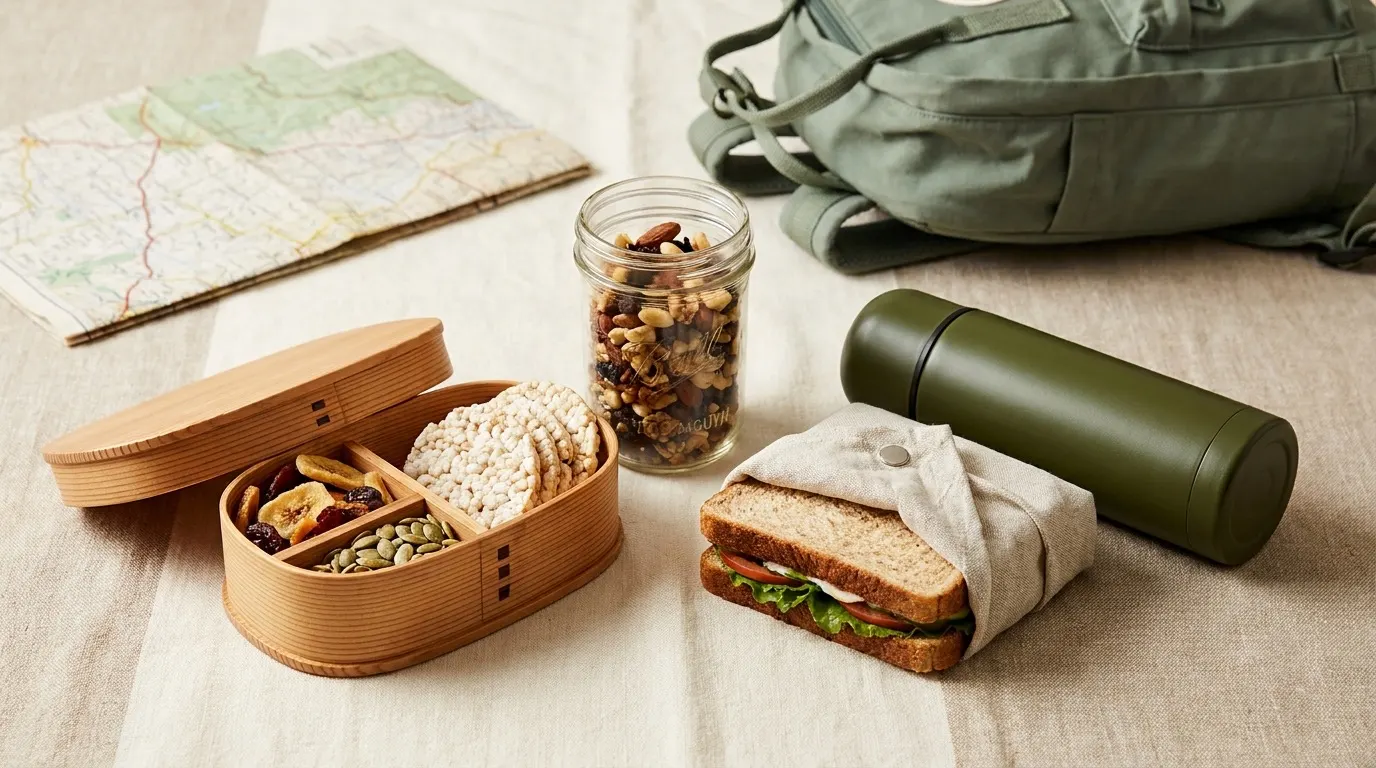
The single best thing you can do for eating soy free on the road is reduce how often you have to rely on strangers to feed you correctly. A well-packed snack bag is your insurance policy.
Here's what actually travels well and is reliably soy-free per current labeling, though you should verify the label every time you buy, since formulations change:
- Plain raw nuts and seeds: Almonds, cashews, sunflower seeds, pumpkin seeds. Check the label, some roasted nut products use soybean oil as a coating. Go for dry-roasted or raw with no added oils.
- Fresh fruit: Apples, bananas, grapes, clementines. Naturally soy-free, no label required, and they travel better than you'd think for a day or two.
- Raw vegetables: Baby carrots, celery sticks, snap peas. Pack them in a small cooler with an ice pack.
- Plain rice cakes: The unflavored kind. Flavored varieties often sneak in soy lecithin or "natural flavors." Stick to the boring ones, they're your friend.
- Soy-free jerky: Beef or turkey jerky can be a great road snack, but the vast majority of jerky brands contain soy sauce or soy protein. Hunt for explicitly soy-free options and verify the current label before every trip, because these formulations change.
- Soy-free protein bars: This is a minefield. Most mainstream protein bars contain soy lecithin or soy protein isolate. Look for bars that specifically advertise soy-free status and double-check the ingredient list, "soy-free" on the front doesn't always mean the formulation hasn't changed since that claim was printed.
- Plain popcorn: Air-popped or simple oil-popped with salt. Avoid flavored microwave varieties and most theater-style bags, which frequently list soybean oil or soy lecithin.
- Hard-boiled eggs (home-cooked): Cook them before you leave. Pack them in a cooler. They're one of the most reliable soy-free proteins you can bring.
Pack more than you think you need. Hunger on the road is not your friend. When you're starving at 2 p.m. and there's nothing verified in reach, you make bad decisions. Overpacking snacks is never a mistake.
Fast Food Drive-Throughs: What to Order and What to Skip
Fast food is where most soy-allergy travelers get into trouble. The menu looks simple. It isn't.
The good news: most major chains publish allergen menus online. Download them or bookmark them offline before you leave home. BensFastFood.com also offers a useful filtering tool to find soy-free fast food options by chain. That said, allergen menus are a starting point, always verify with the specific location, because ingredient sourcing can vary.
Here's how to think through fast food by food category:
Burgers and sandwiches: The bun is almost always a problem. Soy flour and soy lecithin are standard bun ingredients at most chains. Going bunless dramatically reduces your soy exposure from the bread itself. Ask for your patty wrapped in lettuce or served on a tray. Then ask about the patty, some chain burger patties include soy protein as a filler or binder. Plain beef patties at most chains are lower risk, but verify.
Breaded and fried chicken: High risk. The breading typically contains soy, and the frying oil is frequently soybean oil. A plain grilled chicken patty is a meaningfully safer choice than any breaded option, but ask whether the grill is shared with breaded items, and ask what oil is used.
Frying oil: This is a question you have to ask out loud at the counter or drive-through. "What oil do you fry in?" Many chains use soybean oil. If they do, avoid anything fried. If they can't confirm, avoid it.
Sauces: Skip them all unless you can verify the ingredient list. Ketchup is often soy-free per current labels, check the specific brand. Most other sauces, special sauces, ranch, honey mustard, teriyaki, BBQ, are high-risk for soy. Carry your own verified condiment packets from home if sauces matter to you.
Salads: A plain salad with oil and vinegar is one of the lower-risk fast food options. Skip the croutons (soy lecithin is common in crouton coatings) and avoid pre-made dressings unless you can read the label. Ask for plain olive oil and vinegar on the side.
Breakfast items: Scrambled eggs at fast food chains are often made from liquid egg products that contain additives, verify with the chain. Plain cracked eggs cooked on a flat top are lower risk. Avoid biscuits, croissants, and English muffins, all high soy risk.
Sit-Down Restaurants: How to Order Without the Anxiety
Sit-down restaurants give you more control than a drive-through, if you use it. The key is communication. Here's a repeatable system that actually works.
Call ahead during off-peak hours. Don't call at 6:30 on a Friday. Call at 2 p.m. and ask to speak with a manager or chef. Ask: "Do you use soybean oil for cooking? Do your marinades contain soy sauce or soy-based ingredients? Can you prepare a plain grilled protein with no marinade and no sauce?" Get a name. Write it down.
Use the word "allergy," not "preference." Saying "I prefer to avoid soy" gets you a shrug. Saying "I have a soy allergy" triggers a different level of kitchen attention at most restaurants. Be direct about it.
Ask the specific questions. Don't just say "does this have soy?" Ask:
- "What oil do you cook with?"
- "Is the protein marinated, and if so, what's in the marinade?"
- "Does the sauce or dressing contain soy sauce or soy protein?"
- "Is the vegetable broth or stock house-made or from a commercial base?" (Commercial bases frequently contain soy.)
Order plain. Plain grilled protein, chicken, fish, steak, with steamed vegetables and plain rice is the lowest-risk restaurant meal you can order. No sauce, no marinade, no mystery. It's not glamorous, but it's reliable.
Carry a soy allergy card. Print a card that lists soy and all its aliases, and hand it to your server. FARE (Food Allergy Research and Education) offers allergy card templates. A physical card is harder to forget than a verbal conversation.
Cuisine risk levels matter. Asian cuisine, Chinese, Japanese, Thai, Korean, Vietnamese, uses soy sauce in nearly every sauce and marinade. The risk is extremely high. Avoid unless you can speak directly with the kitchen and confirm a completely soy-free preparation. Mexican cuisine is lower risk: plain rice, beans, and grilled meats are often soy-free per current restaurant practice, but verify the cooking oil and any seasoning blends. Plain American-style grilled proteins are your safest restaurant bet when traveling.
And get this: even "healthy" restaurants can be high-risk. Grain bowls, wraps, and Buddha bowls often contain edamame, miso dressing, or tofu you didn't ask for. Always specify.
Gas Stations and Rest Stops: Hidden Gems and Landmines
No one else is giving you a real breakdown of this scenario for eating soy free on the road. Let's fix that, because the gas station snack wall is where a lot of soy-allergy road trips go sideways.
What's actually workable at a gas station or rest stop:
- Fresh fruit cups: The safest grab-and-go option. Plain cut fruit with no added syrups or dressings is naturally soy-free. Check that the cup only contains fruit.
- Pre-packaged hard-boiled eggs: Many gas stations stock these now. Check the ingredient list, some brands add fillers or citric acid, which is generally not soy-derived, but verify there's nothing soy-derived in the additives. Eggs themselves are soy-free.
- String cheese or plain cheese sticks: Soy-free per many current labels, but verify the ingredient list every time. Plain mozzarella or cheddar-style sticks are your best bet.
- Plain potato chips: Many plain salted potato chips are soy-free, the ingredient list is typically potatoes, oil (often sunflower or canola in simpler brands), and salt. Avoid flavored varieties (barbecue, sour cream, ranch, etc.), these frequently contain soy or "natural flavors" that require manufacturer verification. Read every label.
- Plain sunflower seeds in the shell: Often soy-free per current labels. Check for any seasoning beyond salt.
- Water, plain sparkling water, black coffee: Zero soy risk.
What to avoid at gas stations:
- Packaged pastries, muffins, donuts, almost universally contain soy lecithin or soy flour. Avoid.
- Granola bars and most "energy" bars, soy lecithin and soy protein isolate are extremely common. Avoid.
- Crackers, most contain soy lecithin. Avoid.
- Anything fried in-store (roller grill hot dogs, taquitos), oil type is unknown and cross-contact risk is high. Avoid.
- Flavored nuts, the coating often contains soy oil or soy protein. Avoid.
- Packaged sandwiches and wraps, the bread almost certainly contains soy, and the sauces are unverifiable. Avoid.
The crazy part? The gas station fresh fruit cup is genuinely one of the best soy-free road snacks you can find. Boring, yes. Reliable, also yes.
Hidden Soy Ingredients to Watch on Any Label
Reading labels quickly under time pressure is a skill. Here's what you're scanning for. Save this list to your phone.
| Food Item | Typical Soy Risk | Watch Out For | Safer Swap | Where to buy |
|---|---|---|---|---|
| Fast food burger (with bun) | High | Soy flour and soy lecithin in bun; soy protein in patty | Bunless plain grilled patty, no sauce | |
| Breaded chicken sandwich | High | Soy in breading, soybean frying oil | Plain grilled chicken, no sauce, no bun | |
| Plain salad + oil and vinegar | Low | Croutons, pre-made dressings with soy | Ask for plain olive oil and vinegar; skip croutons | |
| Packaged granola bar | High | Soy protein isolate, soy lecithin | Plain nuts or verified soy-free jerky | |
| Plain potato chips (simple ingredients) | Low-Medium | Flavored varieties, shared production lines | Verify label; choose potato, oil, salt only | |
| Hard-boiled egg (pre-packaged) | Low | Added fillers or preservatives in some brands | Check ingredient list; home-cooked is most reliable | Amazonopen_in_new |
| Asian restaurant dish | Very High | Soy sauce in nearly all sauces and marinades | Request plain steamed protein and plain rice; confirm directly with kitchen | |
| Hotel continental breakfast pastry | High | Soy flour, soy lecithin in baked goods | Plain scrambled eggs, fresh fruit | |
| Vegetable soup or broth-based dish | High | Commercial vegetable broth frequently contains soy | Ask about broth source; avoid if unverified | |
| Plain rice (restaurant) | Low-Medium | Cooked in vegetable broth or seasoned with soy-based seasoning | Ask for plain rice cooked in water only |
Beyond the table, here are the hidden soy names to memorize or save to your phone for fast label scanning:
- Soy lecithin
- Soy protein isolate
- Textured vegetable protein (TVP)
- Hydrolyzed plant protein
- Hydrolyzed soy protein
- Miso
- Tempeh
- Edamame
- Natto
- Soy sauce and tamari
- Vegetable broth (unspecified), verify directly with the brand; assume it contains soy until confirmed otherwise
- Natural flavors, may be soy-derived per FDA definition; contact the manufacturer to confirm
- Soybean oil, present in many fast food frying applications; if you have a soy allergy, avoid it and verify with your allergist before consuming
A note on soybean oil: some allergists note that highly refined soybean oil may be tolerated by some people with soy allergies because the refining process removes most soy protein. The FDA does not require highly refined soybean oil to be labeled as a major allergen. That said, individual tolerance varies significantly. If you have a soy allergy, avoid soybean oil unless your specific allergist has told you otherwise based on your personal history and testing. Do not use general guidance here to make that call, this is a conversation for you and your allergist.
Traveling With Kids Who Have Soy Allergies
Traveling with a soy-allergic kid adds a layer of complexity that most guides completely ignore. Here's what actually helps.
Pack double the snacks. Kids eat more under travel stress and boredom than they do at home. If you think you've packed enough, add more. Running out of verified snacks with a hungry kid in the car is how you end up making a panicked gas station run at 9 p.m.
Teach kids to advocate for themselves. Older kids (school age and up) should know how to say "I have a soy allergy" clearly to adults. Practice it before the trip. It's not being dramatic, it's a skill that protects them when you're not right next to them.
Make allergy cards kid-sized. Print a small card that lists the allergy and the hidden names. Kids can carry these in a pocket or small bag. FARE offers templates. Laminate them so they survive the trip.
Hotel breakfast bars are high-risk. Continental breakfast pastries, muffins, waffles, and breads almost universally contain soy. Scrambled eggs (if made from real eggs, not liquid mix, ask) and fresh fruit are the lower-risk options. If the eggs come from a carton or liquid mix, ask about ingredients before serving.
Always carry the epinephrine auto-injector if prescribed. Keep it accessible, not in a checked bag, not buried in a suitcase. Verify dosing and expiration with your allergist before travel. This is non-negotiable.
The prep work for traveling with food-allergic kids is almost all front-loaded. Once you've packed the snacks, printed the cards, and downloaded the allergen menus, the trip itself is much calmer. Do the work before you leave the driveway.
Your Soy-Free Road Trip Checklist
Print this. Tape it to the snack bag. Whatever works for you. This is the short version of everything that makes eating soy free on the road actually manageable.
- Snack bag packed with verified soy-free items, nuts, fresh fruit, rice cakes, jerky (label-checked), protein bars (label-checked).
- Allergy cards printed and accessible for every person with a soy allergy in the car, including kids.
- Chain allergen menus downloaded or bookmarked offline, you may not have cell service at every stop.
- Epinephrine auto-injector packed and accessible if prescribed by your allergist. Check the expiration date before you leave.
- List of soy aliases saved to your phone for fast label scanning at gas stations and rest stops.
- At least one grocery store meal planned per day, grocery stores give you label-reading control that restaurants don't. Build in a stop.
- Restaurants researched and called ahead for any planned sit-down meals.
- Small cooler with ice packs for fresh produce, hard-boiled eggs, and cheese.
I checked the numbers, and honestly, the prep for a soy-free road trip takes maybe two to three hours total, packing, downloading menus, printing cards. That's a small price for not spending a night in an urgent care waiting room.
Eating soy free on the road isn't about being perfect at every meal. It's about reducing risk at every decision point so that the cumulative exposure stays low. Pack smart, ask loud, and don't let hunger rush you into a bad call.
Reminder: ingredient formulations change. A product that was soy-free per the label last month may not be now. Always read the current label before consuming. This article is for informational purposes only and is not medical advice, work with your allergist for guidance specific to your situation. Cross-contact risk varies by manufacturer and facility; contact the brand directly if you have a severe allergy. Nothing in this article constitutes a guarantee that any food is appropriate for your specific allergy.
FAQs
What fast food is soy-free?
No fast food item can be universally declared soy-free, because formulations and frying oils vary by chain and even by location. Your best approach: download the specific chain's allergen menu before you go, choose plain grilled proteins over breaded options, go bunless to avoid soy flour and soy lecithin in bread, and ask about frying oil at the counter. BensFastFood.com offers a filtering tool to narrow down soy-free fast food options by chain. Verify directly with each location, assume nothing until confirmed.
What are the hidden names for soy on ingredient labels?
The most common ones to scan for: soy lecithin, soy protein isolate, textured vegetable protein (TVP), hydrolyzed plant protein, hydrolyzed soy protein, miso, tempeh, edamame, natto, soy sauce, and tamari. Vegetable broth and "natural flavors" can also contain soy, verify with the manufacturer if you see either of these on a label. Save this list to your phone so you can scan quickly while traveling.
Is soybean oil safe for soy allergy?
Some allergists note that highly refined soybean oil removes most soy protein and may be tolerated by some individuals. The FDA does not require highly refined soybean oil to be labeled as a major allergen. That said, individual tolerance varies significantly. If you have a soy allergy, avoid soybean oil unless your specific allergist has told you otherwise based on your personal history and testing. Do not use general guidance here to make that call, this is a conversation for you and your allergist.
What snacks can I bring on a road trip with a soy allergy?
Reliable soy-free road snack options include plain raw or dry-roasted nuts (check for soybean oil coatings), fresh fruit, raw vegetables, plain unflavored rice cakes, home-cooked hard-boiled eggs, plain popcorn, and verified soy-free jerky or protein bars (always check the current label, these formulations change). Pack more than you think you need, especially if traveling with kids. Running out of verified food mid-trip is when risky shortcuts happen.
How do I tell a restaurant I have a soy allergy?
Use the word "allergy" specifically, not "preference" or "sensitivity." Call ahead during off-peak hours and ask to speak with a manager or chef. Ask directly about cooking oils, marinades, sauces, and whether vegetable broth is used in any dishes. Request plain grilled protein with no marinade, steamed vegetables, and plain rice cooked in water. Carry a printed soy allergy card listing soy and all its aliases to hand to your server. FARE offers allergy card templates you can print before your trip.
What cuisines are lowest risk for soy allergy when eating out?
Plain American-style grilled proteins are your safest restaurant bet. Some Mexican cuisine, plain rice, beans, and grilled meats, can be lower risk if you verify the cooking oil and seasoning blends. Asian cuisine (Chinese, Japanese, Thai, Korean, Vietnamese) is the highest risk category: soy sauce appears in nearly every sauce and marinade. Avoid Asian restaurants while traveling unless you can speak directly with the kitchen and confirm a completely soy-free preparation, which is genuinely difficult to guarantee.
Can soy be in foods that don't taste like soy?
Absolutely. Soy is one of the most common hidden allergens precisely because it doesn't have a distinctive flavor in processed forms. Bread, buns, crackers, and pastries contain soy flour and soy lecithin with no soy taste. Frying oil can be pure soybean oil. Sauces, dressings, and marinades contain soy sauce or hydrolyzed soy protein with no obvious "soy" flavor. Vegetable broth and "natural flavors" can both be soy-derived. Never assume a food is soy-free based on taste alone, always read the label or ask.
You may also like
Best Dairy and Soy Free Chocolate Chips in 2026
I've dug through the shelves so you don't have to. Finding dairy and soy free chocolate chips that actually bake well is harder than it should be, especially when half the options hiding behind non-dairy are loaded with soy lecithin. Here is what you need to know before your next shopping trip.
12 min read
Best Soy Free Cookies: Brands to Buy & Recipes to Bake
Finding soy free cookies is harder than it looks — soy lecithin hides in almost every chocolate chip on the shelf. Here's the brand list and baking guide you actually need.
9 min read
Best Soy Free Granola Bars: Brands + DIY Options
Finding soy free granola bars that are actually soy-free is harder than it should be. Here are the verified store-bought picks, a no-bake DIY recipe, and a plain-English guide to spotting hidden soy on labels.
8 min read