
Best Allergen Free Crackers: Top Picks for Soy-Free Snacking
By SoyFreeSnacks Editorial Team
Allergy-aware writers, researchers, and home cooks · Updated September 1, 2026 · 7 min read
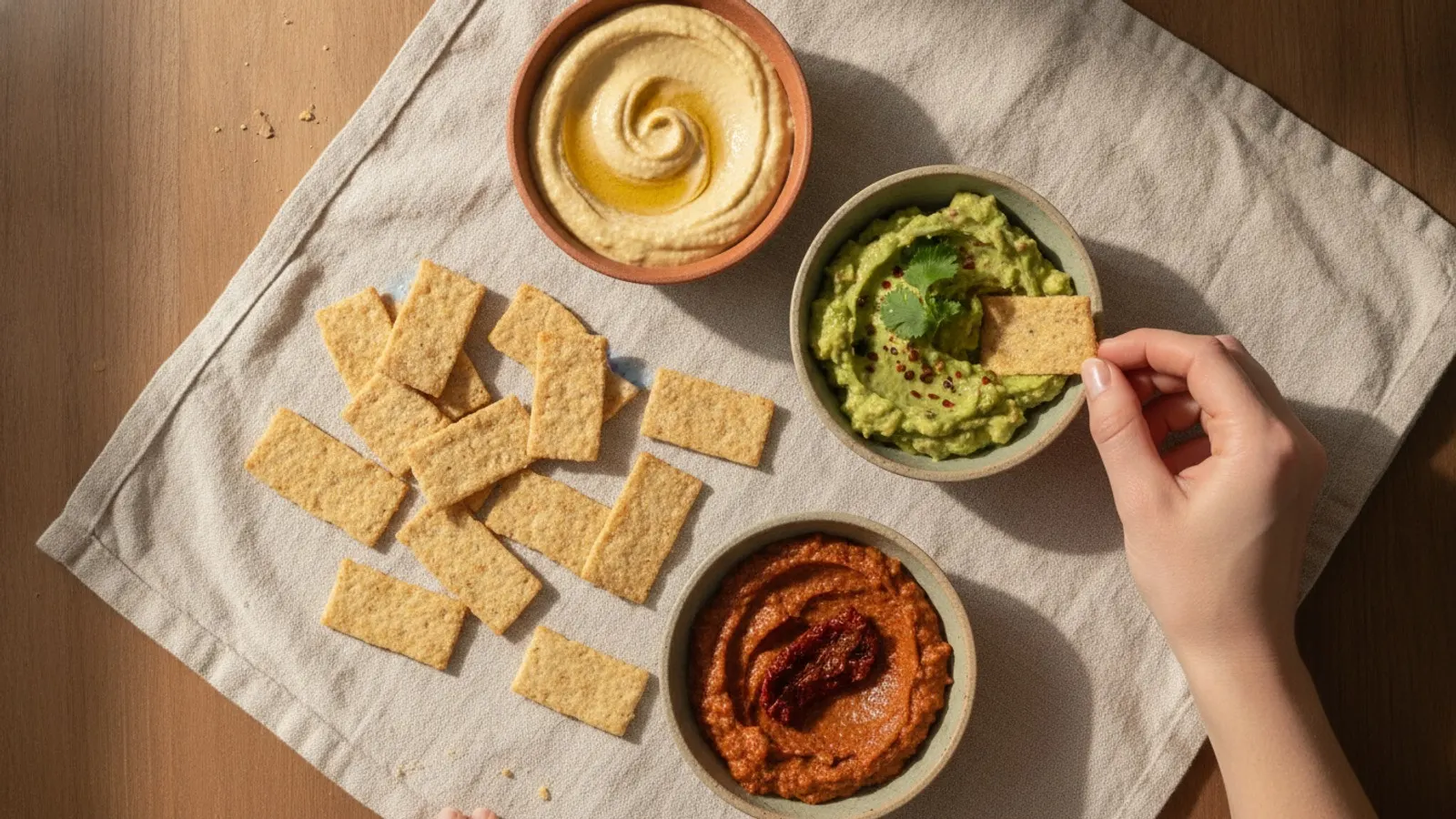
TL;DR: The best allergen free crackers avoid all or most of the top 9 allergens: milk, eggs, fish, shellfish, tree nuts, peanuts, wheat, soybeans, and sesame. Partake, Every Body Eat, MadeGood, and Habeya all make crackers without any of the nine, and each one bakes in a facility that keeps those allergens out.
This article is for informational purposes only and is not medical advice. Always read the current label before consuming; manufacturers can change formulations without notice.
What Makes a Cracker Truly Allergen Free?
The FDA recognizes nine major allergens that drive most allergic reactions: milk, eggs, fish, shellfish, tree nuts, peanuts, wheat, soybeans, and sesame. Sesame finally joined the list under the FASTER Act in January 2023, so you need to watch for it just like you do for tree nuts or peanuts.
The problem is that "allergen free" is not a regulated term on packaging. A brand can slap that label on a box while processing crackers in a facility that also handles wheat and dairy. I checked the manufacturing notes for several brands, and honestly, cross-contact risk varies wildly between facilities.
Differentiating between "free from" claims and certified allergen-free status is crucial. Some brands make voluntary free-from claims on their own packaging while sharing equipment with soy or gluten manufacturers. Others use dedicated cleaning protocols and separate production lines to prevent contamination.
The facility matters just as much as the ingredient list. Partake, for example, says its facility is free from the top 9 allergens, and Every Body Eat bakes its crispbreads in a dedicated allergen-friendly facility. That is the kind of statement you want to see in writing, and it is worth reading the FAQ page of any brand before you trust it.
Cracker formulations vary significantly based on base ingredients too. Rice-based crackers naturally avoid wheat and soy, but you still have to check the coating and the facility. Grain-free options like Habeya sweet potato crackers rely on tubers and rice, and Habeya bakes them in a dedicated allergen-free facility, which is the detail that turns a clean ingredient list into a cracker you can hand to a kid.
The Best Top-9-Free Crackers We Recommend
Let's get to the good stuff. I went through the current labels and facility statements this year so you don't have to guess at what works for your specific allergy profile. If soy is your only concern, the soy-free crackers guide and the top 10 soy-free crackers list cover more brands.
Partake Classic Grahams: These are the heavy hitters. Partake makes them free from the top 9 allergens, sesame included, on a gluten-free flour blend of sorghum and oat flour with sunflower oil and sunflower lecithin instead of soy lecithin. You get a proper crunch without the gritty aftertaste of cheap gluten-free flours. They are sweet grahams rather than a savory cracker, so think snack box and s'mores, not cheese board.
Every Body Eat Crispbread Crackers: Free from the top 14 allergens and corn, grain-free, and built from pumpkin and sunflower seeds with olive oil. They are baked in a dedicated allergen-friendly facility. Sea Salt, Cranberry, and White Pepper are the three flavors, and Sea Salt is the closest thing to a normal savory cracker on this list. This is the one I put out with dip.
Habeya Sweet Potato Crackers: Habeya completely reinvented what a snack cracker can be. These rely on sweet potatoes as their primary base, making them naturally free from the top 9 allergens. You get two flavors: original and cheddar chive.
The texture is delightfully thin and crispy without crumbling into dust like most grain-based crackers. The flavor profile leans savory but not overpowering, which means these pair beautifully with hummus or guacamole. Habeya bakes them in a dedicated allergen-free facility, and they are USDA organic and certified gluten-free. They are a grocery-store find (Kroger and Hannaford carry them) rather than an Amazon order.
MadeGood Star Puffed Crackers: Free from the top 9 allergens, organic, and made in a dedicated nut-free facility. The base is rice and chickpea flour, puffed into little stars, in Sea Salt, Cheddar, and Pizza. These are the lunchbox pick: light, kid-sized, and the allergen statement is printed on the front of the bag where a teacher can read it.
Wheat Thins Original: Not allergen free, but soy-free and nut-free per the current label, which lists "Contains: wheat" and nothing else. A solid option if you can eat wheat and only need to avoid soy. The texture is sturdy enough to hold up in a dip without getting soggy. Just verify the current box, because Nabisco reformulates and older labels listed soy lecithin.
Ingredient formulations change. Always verify the current label before consuming; manufacturers update facilities frequently.
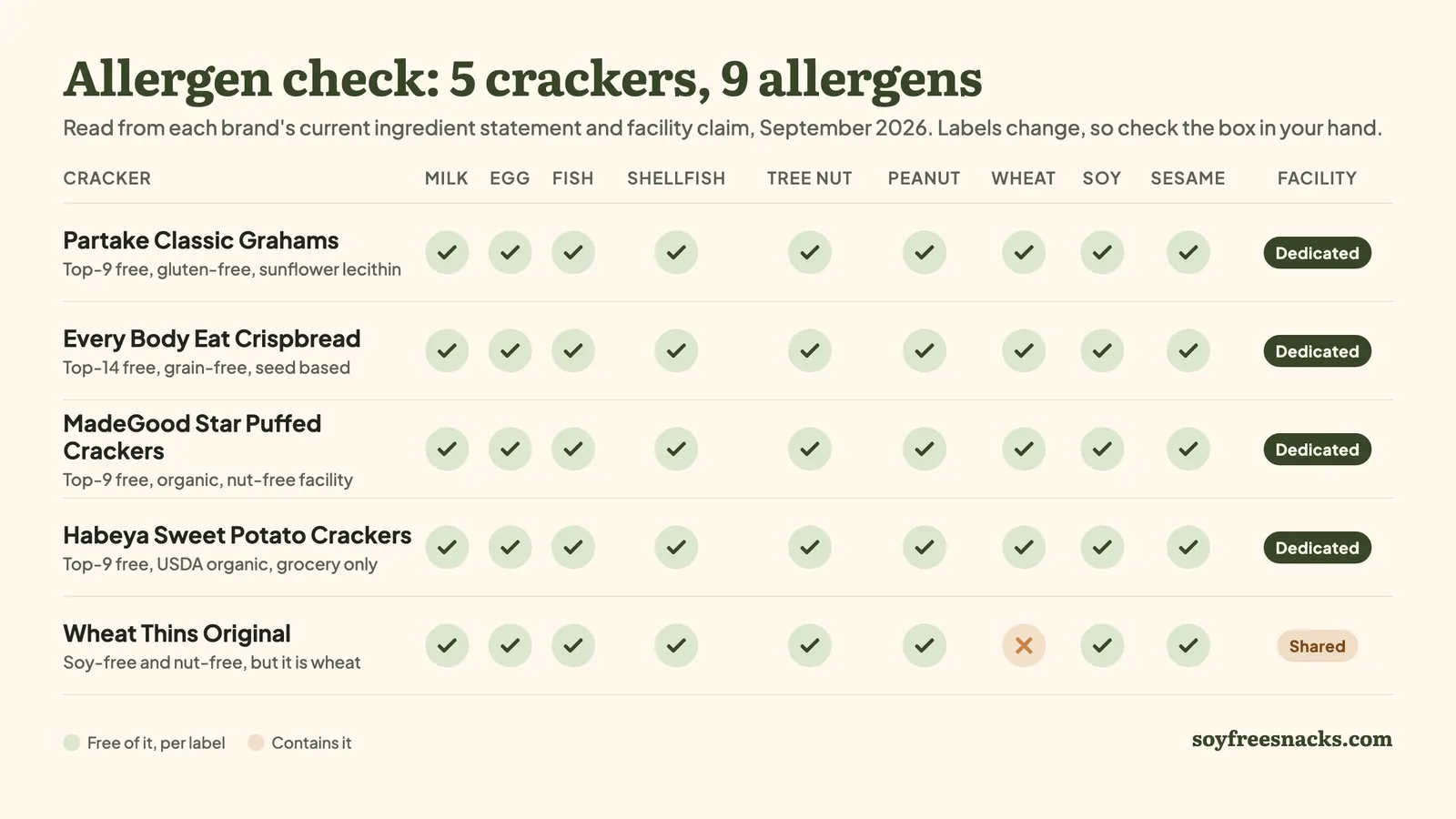
Cross-Contact Risk Breakdown
- Dedicated-facility brands like Partake, Every Body Eat, MadeGood, and Habeya take equipment cross-contact out of the equation.
- Shared facility brands require thorough rinsing protocols to remove soy or wheat residues between production runs.
- Homemade batches are only as clean as your kitchen. Shared toasters, cutting boards, and the flour bin all count.
I always recommend calling the manufacturer directly if a product lists "may contain traces of soy" on the back. Some brands use bulk soybean oil that is refined enough to remove protein, while others use cold-pressed oils where the allergen proteins survive the extraction process.
School-Safe Crackers for Lunchboxes
Allergen free crackers are the easiest school snack to get approved. Most schools with a nut-free policy want two things: a facility statement they can read on the package, and a portion pack that doesn't get opened at home first. MadeGood ticks both, with the nut-free facility line on the front of every bag and 6-count multipacks. Partake sells its grahams in individually wrapped 0.67 oz minis, which are the easiest thing to drop in a classroom snack bin. Every Body Eat is the pick for older kids who want something savory.
Whatever you send, keep the box the packs came in. When a teacher or another parent asks what is in it, the allergen statement is on the outer box, not always on the individual wrapper.
Crackers Free From Specific Allergens (Mix-and-Match Guide)
Sometimes you don't need a full top-nine-free cracker. Maybe you just want nut-free crackers that happen to contain wheat, or sesame-free options for kids avoiding the new allergen.
Nut-Free Crackers: Most major brands make nut-free crackers simply by leaving out chopped nuts and tree nut oils. Brands like Wheat Thins check this requirement easily, though they contain wheat as a base ingredient.
Gluten-Free Soy-Free Options: Rice-based crackers naturally avoid both wheat and soy without needing extra processing steps. Habeya sweet potato crackers are the ultimate example here since tubers don't fall under either allergen category.
Sesame-Free Crackers: Sesame can be tricky because it shows up as tahini, seed oil, or whole seeds on packaging. Brands often list sesame under "contains" statements rather than in the main ingredient line if they use small amounts for garnish.
I checked allergeninside.com to cross-reference multiple brands against current supply chain data. Some manufacturers switched from wheat starch to rice starch mid-year to accommodate stricter allergy protocols, which completely changes your shopping list.
How to Read a Cracker Label for Hidden Soy
Soy hides in places you probably don't expect. Reading the ingredient list alone won't tell you everything about cross-contact risk, so checking the "contains" statement is equally important. Our full list of sneaky names for soy covers the ones that don't say "soy" at all.
Soy Lecithin: This emulsifier keeps fats and water mixed together in processed snacks. Manufacturers add it to crackers to prevent oil separation during baking. The FDA requires soy lecithin to be declared on labels, but you still need to verify whether it is soy-derived or sunflower-based.
Textured Vegetable Protein: Also known as TVP, this ingredient adds protein content and chewiness to snacks. Unless the packaging specifies "soy," assume textured vegetable protein comes from soybeans.
Soy Flour: Some brands use soy flour instead of wheat flour for a gluten-free cracker texture. Soy flour has a nuttier flavor profile and absorbs moisture differently than rice or potato starches.
The "contains" statement is your first line of defense. Manufacturers must list any allergen present in the final product, even if it appears in small quantities like soy sauce powder or soy-based emulsifiers. I always scan that section before checking the ingredient list itself because it highlights potential risks instantly.
Hidden Soy Ingredients Quick Reference
- Soy lecithin: Emulsifier found in most processed snacks (the E322 code covers sunflower and egg lecithin too, so it does not prove soy)
- Textured vegetable protein: Protein filler derived from soybeans
- Soy flour: Ground soybean meal used as a wheat substitute
- Hydrolyzed soy protein: Flavor enhancer with hidden allergen proteins
- Soybean oil: Refined oil where protein is usually removed, but unrefined retains it
When in doubt about a specific brand, call their customer service line. Most companies provide direct contact info on packaging and will confirm whether their facility processes soy separately from other allergens.
Allergen Free Crackers Comparison Table (2026)
| Brand / Product | Soy-Free | Gluten-Free | Nut-Free | Sesame-Free | Dairy-Free | Egg-Free | Notes | Where to buy |
|---|---|---|---|---|---|---|---|---|
| Partake Classic Grahams | Yes | Yes | Yes | Yes | Yes | Yes | Top-9-free facility; sweet graham, sunflower lecithin | Amazonopen_in_new |
| Every Body Eat Crispbread Crackers | Yes | Yes | Yes | Yes | Yes | Yes | Top-14-free and corn-free; dedicated facility; seed based | Amazonopen_in_new |
| MadeGood Star Puffed Crackers (Sea Salt) | Yes | Yes | Yes | Yes | Yes | Yes | Top-9-free; dedicated nut-free facility; organic | Amazonopen_in_new |
| Habeya Sweet Potato Crackers | Yes | Yes | Yes | Yes | Yes | Yes | Top-9-free; dedicated facility; grocery stores only | |
| Wheat Thins Original | Yes | No | Yes | Yes | Yes | Yes | Contains wheat; "Contains: wheat" is the only allergen on the label; shared facility |
Scroll the table sideways for the rest of the columns
The table above highlights the allergen free crackers that consistently avoid the top allergens. Remember to verify current packaging before buying, since facility protocols change when manufacturers adjust production lines.
FAQs
What crackers are allergy free?
Allergen free crackers avoid the top 9 FDA-recognized allergens: milk, eggs, fish, shellfish, tree nuts, peanuts, wheat, soybeans, and sesame. Partake, Every Body Eat, MadeGood, and Habeya all make crackers without any of the nine.
What crackers are made in a nut-free facility?
Partake, MadeGood, Every Body Eat, and Habeya all bake in facilities that don't handle nuts. MadeGood prints the nut-free facility statement on the front of the bag, which is what most schools want to see.
Are Ritz Crackers made in a nut-free facility?
The manufacturer processes Ritz Crackers alongside other products using shared equipment. Verify the current packaging to confirm whether they use separate cleaning cycles between runs.
What are the 9 major foods that cause most allergic reactions?
The FDA recognizes milk, eggs, fish, shellfish, tree nuts, peanuts, wheat, soybeans, and sesame as responsible for nearly all IgE-mediated food reactions.
What crackers are safe for nut allergies?
Certified nut-free brands use separate production equipment to eliminate cross-contact risk. Always check the facility notes on packaging before purchasing.
Which allergen free crackers are school safe?
MadeGood Star Puffed Crackers and Partake mini grahams both come in portion packs with the allergen-free facility statement printed on the package, which is what most nut-free classrooms ask for.
You may also like
Best Allergen Free Protein Bars (2026): Soy-Free Picks
Allergen free protein bars skip the top eight major allergens, but hidden soy derivatives still hide on wrappers. Here's how to spot them and pick a bar that won't trigger your next reaction.
9 min read
Soy Free Saltine Crackers: Best Picks & What to Avoid
Most classic saltines list soybean oil on the ingredient panel, making them off-limits for strict avoiders. Here is exactly what passes and what you should skip.
7 min read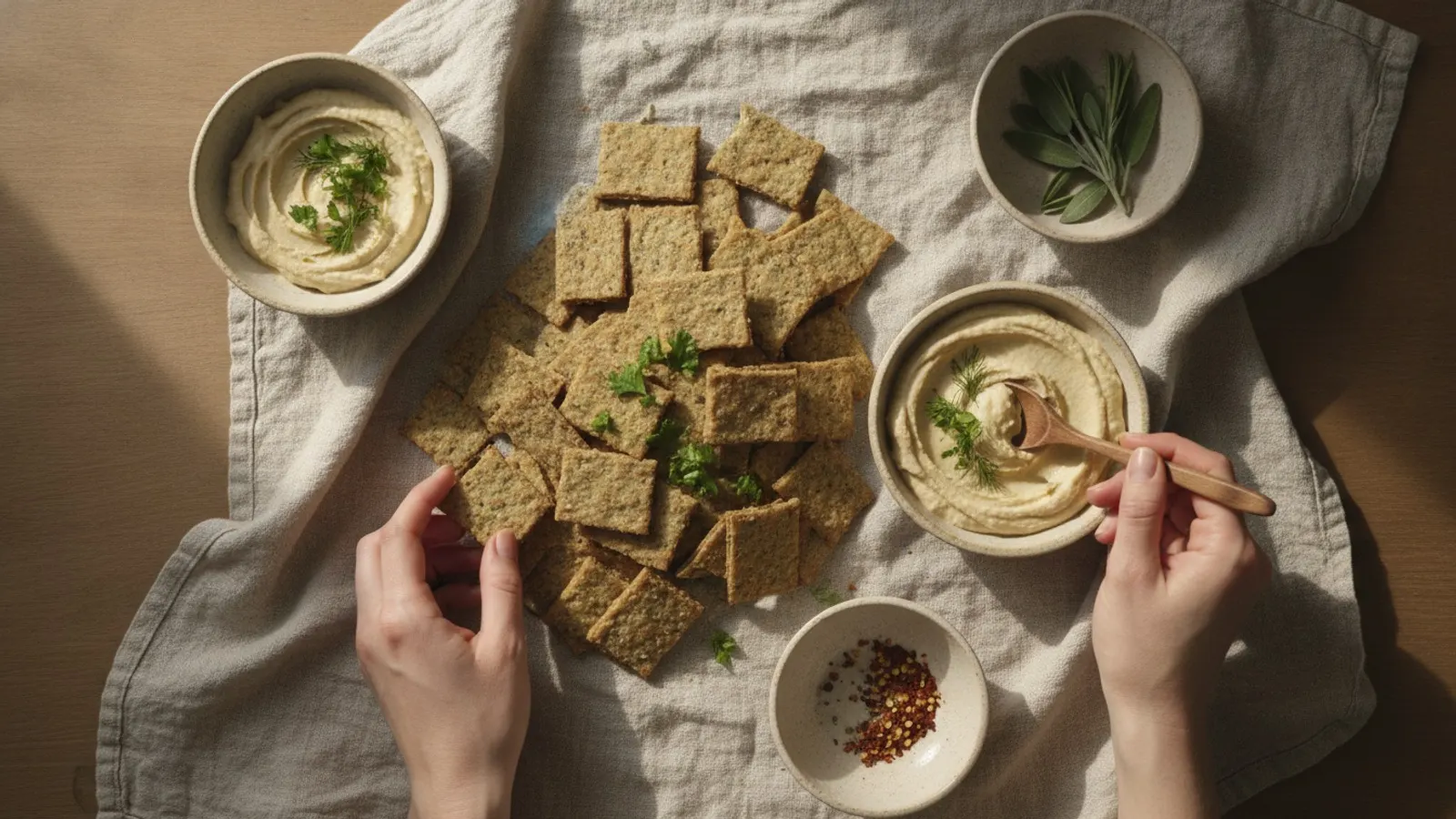
Best Soy Free Crackers: Brands You Can Actually Trust
Looking for soy free crackers that you can trust? I dug through current formulations to find brands that are truly soy-free and what to watch for on labels.
8 min read