
Best Soy-Free Pretzels: Brands You Can Actually Trust
By SoyFreeSnacks Editorial Team
Allergy-aware writers, researchers, and home cooks · Updated July 3, 2026 · 8 min read
This article is for informational purposes only and is not medical advice. If you have a soy allergy, work with an allergist. Always read the current label before consuming, manufacturers can change formulations without notice.
Soy-Free Pretzels at a Glance
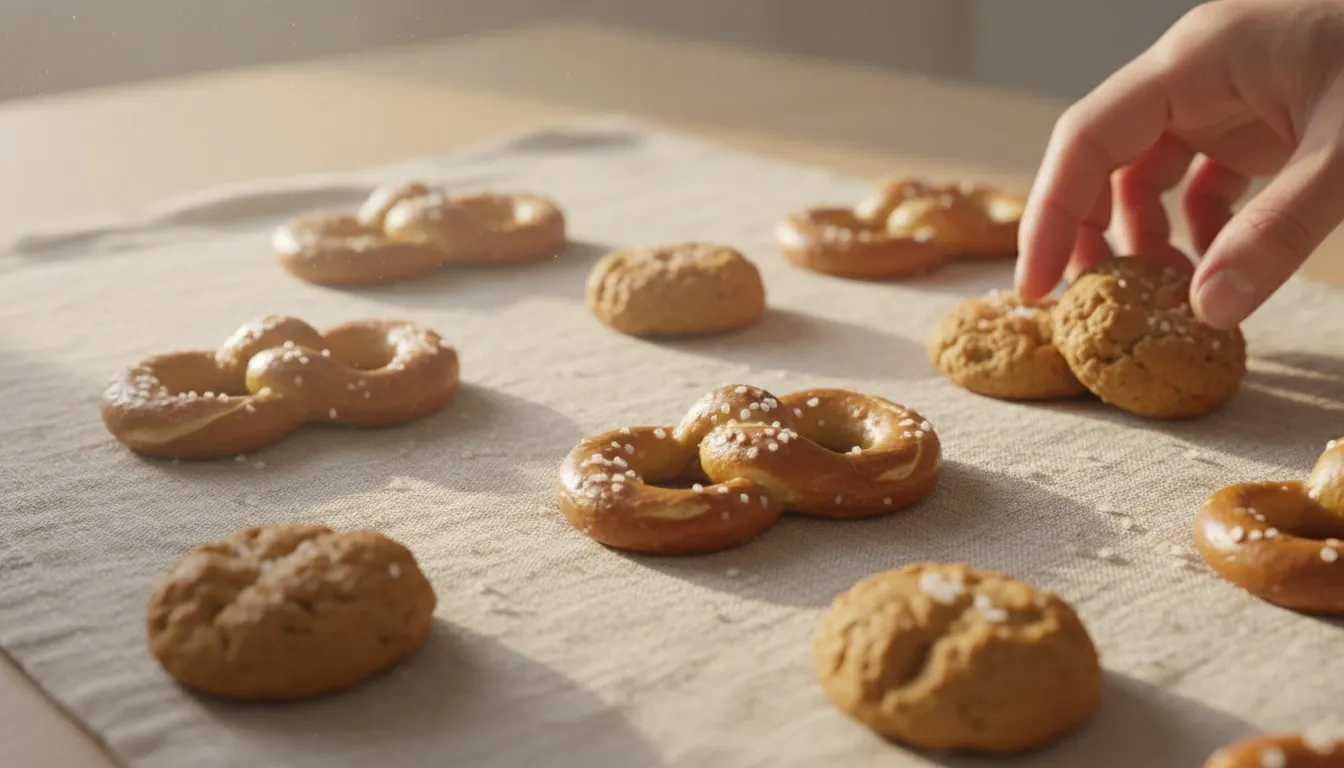
Finding reliable soy-free pretzels is harder than it should be. Several pretzel brands are made without soy ingredients, including No Whey Foods, Savor by Suzie, FitJoy, Amish Pretzel Co., and Katz Gluten Free. These are the soy-free pretzels I'd point a friend to first. Always read the current label, because formulations change. If you have a severe soy allergy, contact the manufacturer directly to ask about shared-equipment or facility cross-contact risk.
That's the short answer. The longer one involves soy lecithin hiding in plain sight, mainstream brands that are not universally soy-free, and a few questions you should be asking brands before you buy. Let's get into it. If you just want the shortlist, we keep ranked soy-free lists for crackers and chips.
The Best Soy-Free Pretzel Brands Right Now
I want to be upfront: every brand listed here is soy-free per the current label information available at the time of writing. That does not mean the formulation will never change. Verify before you buy, every single time. These are the soy-free pretzel brands worth knowing about.
No Whey Foods
No Whey Foods makes chocolate-covered pretzels that are top-9 allergen free, meaning no soy, dairy, peanuts, tree nuts, eggs, gluten, sesame, fish, or crustaceans. For someone managing multiple food allergies, this is a big deal. You can find them on Amazon and directly on their site at No Whey. If you're buying for a kid with a long allergen list, this one deserves a serious look.
Savor by Suzie
Savor by Suzie makes grain-free pretzels built on a cassava flour base, no grains, no gluten, no soy. They come in multiple flavors, they're paleo-friendly, and they've built a real following (135+ reviews on their site, which isn't nothing for a specialty snack, verify this figure is current before relying on it). Available on Amazon and directly from savorbysuzie.com. The cassava flour pretzels category is growing fast, and Savor by Suzie is one of the better options in it.
FitJoy
FitJoy grain-free pretzels use cassava flour and chickpea flour, with no soy ingredients listed. What makes FitJoy stand out is availability: you can grab them at Costco, which makes them accessible to people who aren't ordering specialty food online. Also available on Amazon and through Fitjoyfoods. The Costco angle is genuinely useful if you're buying in bulk for a household or a school lunch rotation. Always verify the current label, since even widely available products can quietly change formulations.
Amish Pretzel Co.
Amish Pretzel Co. makes soft pretzels that are free of soy, dairy, eggs, nuts, and sesame. No harsh preservatives either, which some parents appreciate. Soft pretzels without soy are harder to find than crunchy ones, so this fills a real gap. Available through their site at Amishpretzelco. Verify the specific SKU you're buying, since product lines sometimes expand and new items may have different formulations.
Katz Gluten Free
Katz Gluten Free soft pretzel nuggets are free of gluten, dairy, nuts, and soy, and they're kosher certified. You can find them at Walmart and on Amazon, which makes them one of the more accessible soy-free soft pretzel options for mainstream shoppers. Check the current Walmart listing for the most up-to-date allergen info.
Comparison Table: Soy-Free Pretzel Brands (2026)
| Brand | Pretzel Type | Also Free Of | Where to Buy | Notes |
|---|---|---|---|---|
| No Whey Foods | Chocolate-covered | Dairy, gluten, peanut, tree nut, egg, sesame, fish, crustacean | Amazonopen_in_new Buy on Amazon | Top-9 allergen free; verify current label |
| Savor by Suzie | Grain-free (multiple flavors) | Gluten, grains | Amazonopen_in_new Buy on Amazon | Cassava base; paleo-friendly; verify current label |
| FitJoy | Grain-free | Gluten, grains | Amazonopen_in_new Buy on Amazon | Cassava + chickpea flour; widely available; verify current label |
| Amish Pretzel Co. | Soft pretzels | Dairy, egg, nuts, sesame | Visitopen_in_new Visit brand site | No harsh preservatives; verify current label per SKU |
| Katz Gluten Free | Soft pretzel nuggets | Gluten, dairy, nuts | Amazonopen_in_new Buy on Amazon | Kosher certified; verify current label |
Cross-contact risk varies by manufacturer and facility. Contact the brand directly if you have a severe allergy. Formulations change, always verify the current label before consuming.
What About Snyder's, UTZ, and Auntie Anne's?
These three come up constantly in search, and honestly, the top results never give a straight answer. So here it is.
Snyder's of Hanover
Many Snyder's varieties contain soy, specifically soy lecithin, which shows up in their ingredient lists across multiple SKUs. Snyder's has a large product line and formulations vary by variety, so you cannot make a blanket call on the whole brand. Check the allergen information for each specific product at Snyder'S Of Hanover before buying. If a variety lists soy lecithin or any soy derivative, avoid it.
UTZ
UTZ does not market a universally soy-free pretzel line. Soy status varies by product across their range, and there is no blanket answer for the whole brand. Go directly to Utzsnacks and check the specific product you're considering. Verify directly with the brand and assume a UTZ product contains soy until you have confirmed otherwise on the current label.
Auntie Anne's
Auntie Anne's pretzels contain soy-based ingredients per their official allergen menu. This applies to their standard pretzel products. If you or your child has a soy allergy, avoid Auntie Anne's. Check their current allergen menu at auntieannes.com directly, and even then, cross-contact risk at a food service location is a separate concern worth factoring in.
How to Read a Pretzel Label for Soy
Soy lecithin is the most common hidden soy in pretzels. It's used as an emulsifier, it improves texture and extends shelf life, which is why conventional pretzel makers love it. The problem is it's often listed quietly in the middle of a long ingredient string, and people miss it.
Here are the soy-derived ingredients to look for on any pretzel label:
- Soy lecithin, the most common one in pretzels
- Soybean oil, often listed as "vegetable oil" with soy specified in parentheses, or sometimes not specified at all; if you can't confirm it's soy-free, avoid it
- Textured soy protein (TSP) or textured vegetable protein (TVP), less common in pretzels, but it shows up in flavored varieties
- Miso, appears in some flavored snack coatings
- Hydrolyzed soy protein, often in seasoning blends
- Edamame, rare in pretzels but worth knowing
- Soy sauce or tamari, in Asian-flavored varieties
Under the FDA Food Allergen Labeling and Consumer Protection Act (FALCPA), soy must be declared in plain language on US food labels. That means you should see "soy" called out clearly, either in the ingredient list itself or in a "Contains:" statement below it. If you see "Contains: Soy" anywhere on the label, that product has soy in it. Full stop.
And get this: the "Contains:" allergen statement covers direct ingredients only. It does not cover cross-contact. That's handled by a separate, voluntary advisory, which brings us to the next section.
Cross-Contact Risk: What the Label Won't Always Tell You
Here's the part that frustrates me most about allergen labeling: the "may contain soy" or "processed in a facility with soy" advisory is completely voluntary. The FDA does not require it. That means a brand can make a product on shared equipment with soy and legally put nothing on the label about it. (FDA guidance on precautionary allergen labeling confirms this.)
The distinction between "shared equipment" and "shared facility" matters too:
- Shared equipment means the same machine that touches soy also touches your pretzel. Higher cross-contact risk.
- Shared facility means soy is somewhere in the building, but not necessarily on the same line. Lower risk, but not zero.
If you have a severe soy allergy, the label alone is not enough. Call or email the manufacturer. Here are specific questions worth asking:
- "Is this product made on shared equipment with any soy-containing products?"
- "Is soy processed anywhere in the same facility?"
- "Do you test for soy cross-contact?"
- "Has the formulation or production facility changed recently?"
A brand that can't answer these questions clearly is a brand I'd be cautious about. Good allergen-conscious manufacturers know this information and share it readily.
A Quick Note for Parents
If you're buying soy-free pretzels for a kid with a soy allergy, a few extra steps are worth it. The brands above, No Whey Foods, FitJoy, and Katz Gluten Free, are the ones I'd look at first for kid-friendly formats (chocolate-covered, nuggets, grab-and-go). If your child eats at school, check whether the school's allergy policy requires manufacturer documentation. Some schools need written confirmation of allergen status, not just a label. And re-verify labels at the start of every school year. A product that was soy-free last year may not be now.
Always read the current label before consuming. This article is for informational purposes only and is not medical advice. Cross-contact risk varies by manufacturer and facility, contact the brand directly if your child has a severe soy allergy. Your child's allergist makes safety calls, not this article.
FAQs
What pretzels don't have soy?
Pretzel brands without soy ingredients include No Whey Foods (chocolate-covered, top-9 allergen free), Savor by Suzie (grain-free, cassava-based), FitJoy (grain-free, available at Costco), Amish Pretzel Co. (soy-free soft pretzels), and Katz Gluten Free (soft pretzel nuggets). Always verify the current label before consuming, formulations change without notice.
Is there soy in regular pretzels?
Yes, many conventional pretzels contain soy lecithin, which manufacturers use as an emulsifier to improve texture and shelf life. It's one of the most common hidden soy ingredients in the snack aisle. Always check the ingredient list and the "Contains:" allergen statement on any pretzel you're considering. If soy lecithin or any soy derivative appears, avoid it if you have a soy allergy.
Are Snyder's pretzels soy free?
Many Snyder's of Hanover varieties contain soy lecithin. Because their product line is large and formulations vary by SKU, there is no blanket answer for the whole brand. Check the allergen information for each specific Snyder's product at snydersofhanover.com. Do not assume any Snyder's variety is soy-free without confirming on the current label.
Do UTZ pretzels have soy?
UTZ does not offer a universally soy-free pretzel line. Soy status varies across their product range. Check each specific UTZ product at utzsnacks.com, and verify directly with the brand. Assume a UTZ product contains soy until you have confirmed otherwise on the current label.
Do Auntie Anne's pretzels contain soy?
Yes. Auntie Anne's pretzels contain soy-based ingredients per their official allergen menu. If you have a soy allergy, avoid Auntie Anne's. Check their current allergen menu at auntieannes.com for the most up-to-date information, and factor in cross-contact risk from the food service environment.
What should I avoid if I'm allergic to soy?
On pretzel labels specifically, watch for soy lecithin, soybean oil, textured soy protein, hydrolyzed soy protein, miso, edamame, and soy sauce. In ingredient lists, "vegetable oil" may include soybean oil, look for clarification in parentheses. If it isn't confirmed soy-free, avoid it. For a complete list of soy-containing ingredients to avoid, work with your allergist. This article is not a substitute for medical guidance.
Are FitJoy pretzels soy free?
FitJoy grain-free pretzels do not list soy ingredients. They use cassava flour and chickpea flour as their base. They're available at Costco, Amazon, and the FitJoy website. That said, always verify the current label before purchasing, as formulations can change. If you have a severe soy allergy, contact FitJoy directly about shared-equipment or facility practices.
You may also like
Best Soy Free Crackers: Brands You Can Actually Trust
Looking for soy free crackers that you can trust? I dug through current formulations to find brands that are truly soy-free and what to watch for on labels.
8 min read
Best Soy Free Tortilla Chips: Brands You Can Actually Trust
I broke down the ingredient lists so you don't have to: here's exactly where soy hides in tortilla chips and which brands skip it entirely.
7 min read
Best Soy Free Bread Brands You Can Buy in 2026
Five soy-free bread picks make the cut, but the claim behind each loaf matters. Here's what the labels say, what the factories don't, and where to look.
10 min read